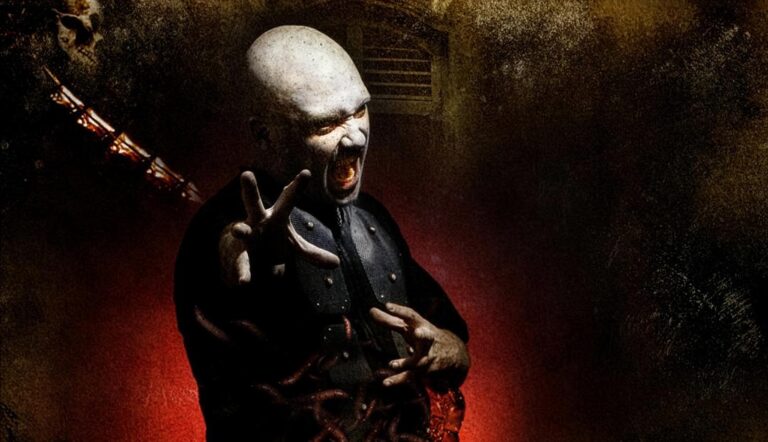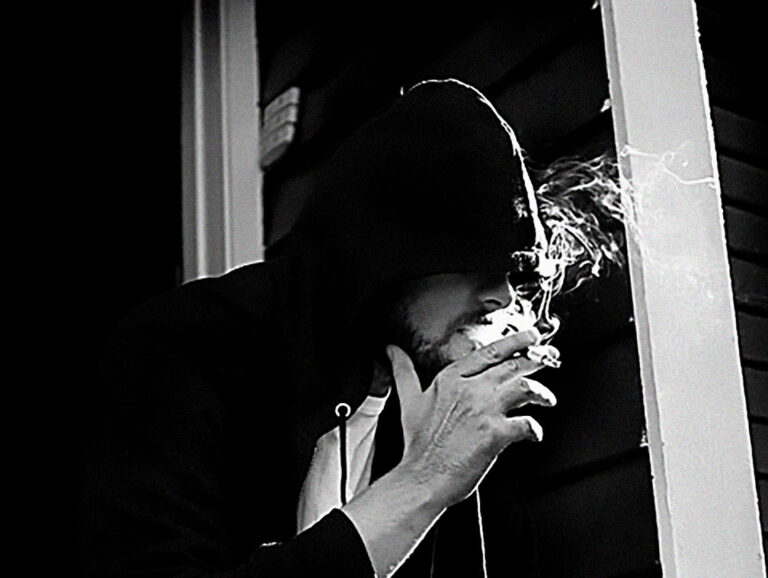
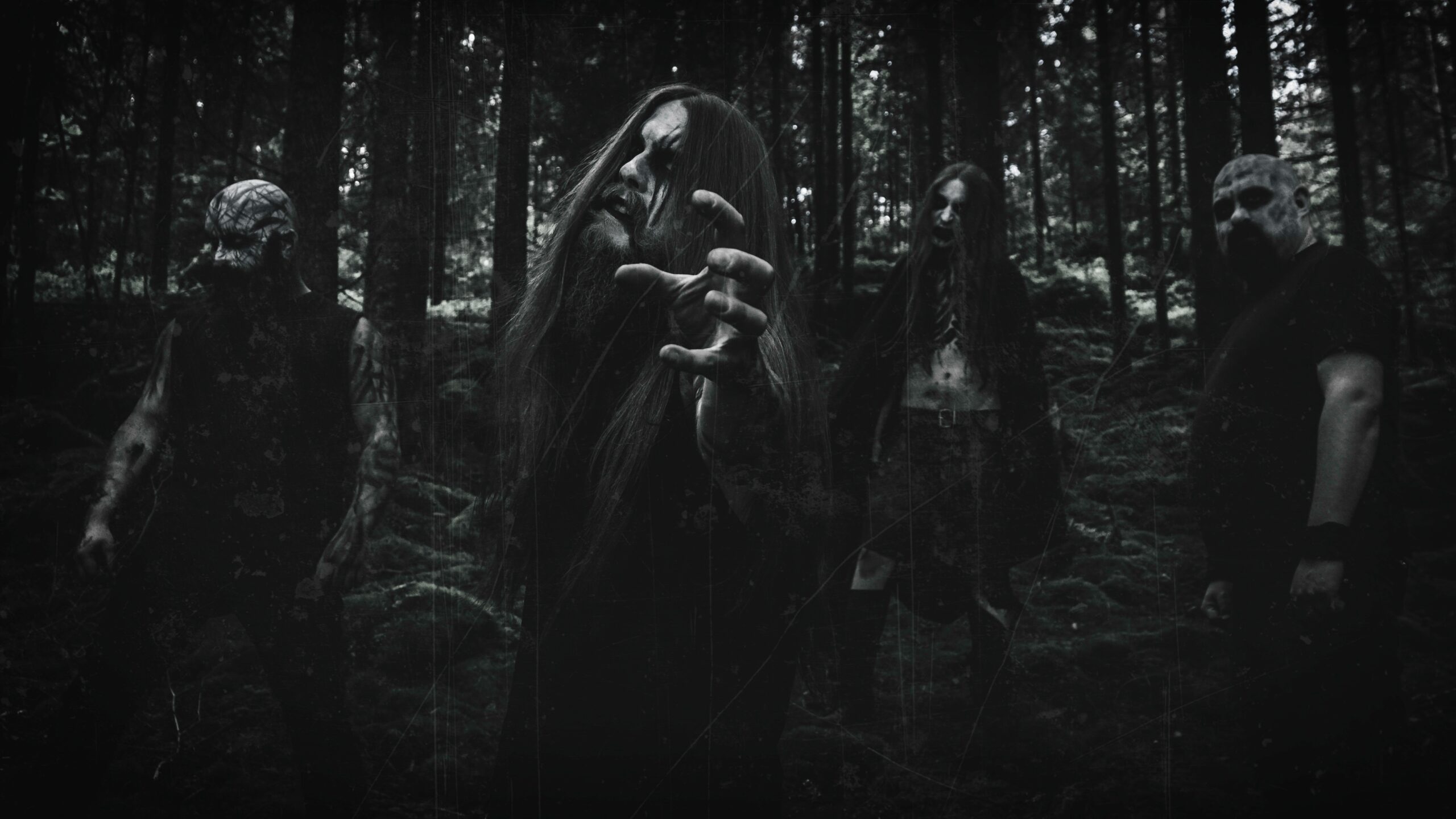
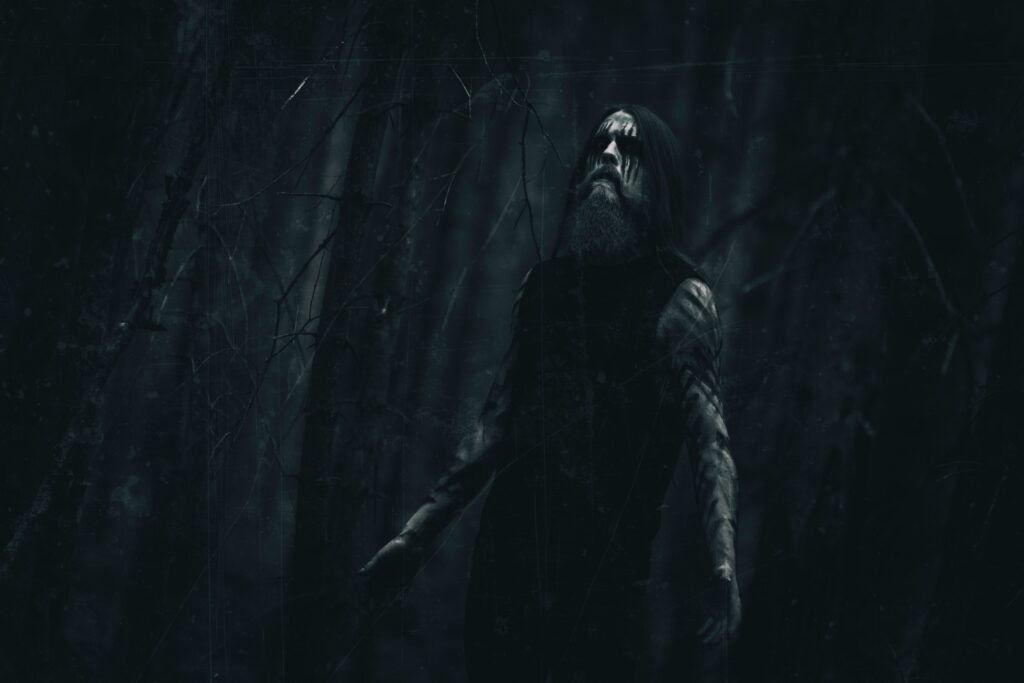
The Norwegian black metal band MORK has now been going for over 20 years. But despite the band starting back in 2004, their debut album “Isebakke” did not come out until 2013 – nine years later. Since then a lot has happened, and in 2024 the band released their seventh album, simply titled “Syv”, which means “Seven” in English. Throughout it all, MORK has been led by Thomas Eriksen, and Inferno Metal Festival has become an important part of the band’s history, with Mork now appearing at the festival for the fourth time, this time on the main stage. What Inferno means to Mork is something we will find out more about when we catch up with Thomas himself on a cold November day.
To understand Mork, we have to go back in time to when Thomas started the band as a one-man project, so let’s go back to Halden in the early 2000s.
Mork had a slow start, and between 2004 and 2013 only one demo was released before the debut album came out. However, in recent years the albums have been coming at regular intervals. What do you think caused that slow start, and what has made you so much more active in recent years?
– In the beginning, black metal – or what would eventually become Mork – was a curiosity I dabbled with on the side, or in the shadows, if you will. I recorded a batch of songs under the name Skrotum, which has never surfaced, and one recorded jam with current Mork guitarist Alex Bruun under the name Skogdjup. After recording and “releasing” (DIY CD-R to close friends) “Rota til ondskap”, I actually put together and recorded a follow-up EP titled “Av jord er vi kommet”, which was never finished or released, although it contained quite a few awesome riffs. I’m considering dusting some of those off these days – either for Mork or even for Udåd.
A couple of years after that, I began writing and recording an album for Mork. Tons of cool riffs. I’ve re-recorded a couple of those tracks, which have been waiting for a proper place on a Mork release. One of them can now be heard on the “Syv” album under the title “Til Syvende Og Sist”.
Just before creating “Isebakke” in 2013, I also demoed a bunch of more technical and symphonic tracks that were never used – well, one verse riff will be on the upcoming Mork album. I’ve reached the point where riffs that are 15–20 years old sound fresh to my ears again, which is rewarding.
That was a lot of pre-“Isebakke” talk, but it shows that I was actually quite busy. The reason Mork became a priority outwardly in 2013 is simple: it was time for me to go all-in and follow this path at that point in my life.
Mork has spent a lot of time playing outside Europe, which is quite unusual for smaller Norwegian bands. You’ve been to Japan, Brazil, Colombia, Paraguay, Argentina, India and Uruguay, and you’re going to Mongolia. It can hardly be a money-spinner to play shows that far away and in some of those places, so what is it that drives you to play so far from home and in such unusual countries for Norwegian black metal?
– We never come home empty-handed. That’s our rule: we don’t lose money doing this. For me personally, it’s all about traveling and seeing the world. In 2004, I would never have imagined that Mork would take me to the ancient temples in Kathmandu, across the streets of Shibuya, or drinking Jack and Cokes in Lemmy’s old apartment building down the street from the Rainbow.
If everything goes to plan, we’ll cross off yet another continent in January by visiting Australia.
Is there a big difference between playing in countries in Asia and South America and playing in Norway?
– For me, it’s mostly just different-looking people with different languages, basically. But of course, a band full of Norwegians is more exotic in a country far away than we are at home. Still, you have black metal admirers all over the world, which proves how special and hard-hitting this genre is – it really touches people.
But you mention that you were in Lemmy’s apartment drinking Jack Daniel’s. What was that about? Are you talking about Harratt Towers now? How did you end up there?
– Mind you, this was a couple of years after he passed. When we played Las Vegas, San Diego and Los Angeles in 2019, we spent a lot of time at the Rainbow. We even rented the Rainbow Airbnb, which is in the same yard as the legendary bar. While there, we got to know a lady who happened to live at Harratt Towers. So we ended up having drinks at her apartment as well as visiting the late Lemmy’s door, of course. We even had a pool party there one of the last days, as the apartment building actually has a pool as well. It was fun being able to see the Sunset Strip, even though we are way past its glory days. I got to see a gig with original AC/DC singer Dave Evans at the Whisky a Go Go, too. I also had a drink at the Comedy Store one night, as I remember Alex and I walked the whole length of the “Strip”.
Playing Inferno was our first goal when we started as a live band. I had been going there for years and always thought about how cool it would be to be part of the lineup.
– Thomas Eriksen
We have to turn to Inferno Metal Festival and Thomas’s long history with the festival. He has been there as a member of the audience, he has played there with his other band Udåd, and he has been a DJ at the festival several times.
This will be the fourth time Mork plays at Inferno Metal Festival. The first time was in 2016, so ten years ago in 2026. What do you enjoy about playing at Inferno?
– Playing Inferno was our first goal when we started as a live band. I had been going there for years and always thought about how cool it would be to be part of the lineup. Inferno has always been, in my eyes, a proper place to debut or showcase a band or project.
When I first met Jan Martin in early summer 2015, I didn’t quite believe him when he said he would consider us. But then, a couple of days after my birthday in July, I got the email. Jan Martin apologised for missing the exact birthday date, but offered us a spot at the upcoming festival. Since then, we’ve been honoured to return – and to rise on the schedule and bill each time. Thank you.
This time you will be on the main stage, Rockefeller, opening the festival’s last day. What are your thoughts on that? There is usually a great atmosphere from the moment the doors at Rockefeller open.
– In 2016, we played the second spot at John Dee; in 2019, we played a bit later on the same stage; in 2023, we headlined it, and now we’re moving over to Rockefeller. We really appreciate the way Inferno builds bands and gives them their due. As I mentioned earlier, that’s why Inferno is a good festival.
We treat our spot with respect and will deliver a show that goes beyond anything we’ve done before. This one is special for us – one for the books.
Since last time, you’ve brought in Asgeir Mickelson on drums, which is a bit fun for us at Inferno, as he is the one who does the design for us. How did this collaboration come about?
– Here we go again with the Inferno connection – I actually got to know him at the festival. Just hanging around at the roof bar, as you do. One year he approached me and said I should let him know if we ever needed a drummer. I can’t remember if it was a year earlier or not, but in 2019 we did need a stand-in behind the kit. Asgeir played two shows in England and one in Italy with us. Since then he’s been on standby.
About a year ago he reminded me he wanted to play, but all shows naturally had to go to our then-current drummer (Malignant). Shortly after, purely by coincidence, our old drummer departed, and Asgeir was asked to take the position.
He performs on the new Mork album. And of course, it earns some cool points that he’s an old hitter in the industry – having been part of Testament, Borknagar, Ihsahn and Sarke, to mention a few.

If my sources are correct, Mork’s very first concert was ten years ago. That was in Poland, in Olsztyn, on New Year’s Eve 2015. Is that right? What was that show like, and what has changed in your live performances since then?
– It was January 30th, at Nowy Andergrant in Olsztyn. Being basically unknown, we thought it was pretty cool to debut the band outside Norway. Our first drummer was Polish, and he got us on the bill that night. It was a mini-festival called Festiwal im. Szymona Czecha, in memory of Szymon Czech—an influential producer and musician in the Polish metal scene. You can actually find a couple of clips from our show on YouTube.
To keep costs down, we borrowed guitars and basses from a music store in Warsaw, rented a car, drove to Olsztyn, and slept in the car before heading back to the airport. I remember running into Peter from Vader that night—he was puking in the backstage toilet. Our first bassist, Iljadir, stepped on his own cable and unplugged himself (without noticing), and forgot how to play certain songs. He fired himself before we even left the stage that night. Love the guy to death, but it was funny.
Good memories.
In recent years Mork has been releasing records at intervals of one to two years, which suggests it might not be long until Mork’s eighth album. Do you have anything in the works?
– Album number eight is in the final days of mixing as we speak. Soon we’ll move into mastering. The next step in the Mork saga. Exciting things ahead – without doubt the best work yet. We aim to unveil it in time for Inferno 2026.
You also have a couple of other bands you’re involved with, such as Udåd and The Deathtrip. What is happening with those bands these days?
– The Deathtrip is the band of Peaceville Records’ label manager. I was asked to contribute bass on the second album, and that’s about the extent of my involvement. Great album, by the way – “Demon Solar Totem” (2019).
Returning to the Inferno connection, Udåd debuted live at the festival this year (2025). I’ve been working on the second album for a while now. Since the music and approach are so different from Mork, I need to be in a certain state of mind to work on it. So the creative process for Udåd happens every full moon, so to speak. I’m getting close to having enough songs for an album. Everything has to be just right – atmosphere, riffs, sound, and most importantly mindset.
Finally, I’m wondering about something, because Mork clearly has its roots in Norwegian black metal, from the sound to the artwork and corpsepaint, but one thing that sets Mork apart is that you don’t use a pseudonym. Was that something you ever considered, and if so, why did you decide against it?
– In the very beginning, I did take on a pseudonym, but it never stuck. After some years I realised – consciously or unconsciously – that it was too late to start using one. So it never happened.
In the end, I’m not pretending to be anything other than myself. I use the paint, and the music does something to me on stage – a kind of spiritual exercise to reach something within me. It brings out a primal instinct that allows me to sing and perform the way I do. I don’t believe in anything special, but I admit that some other part of me comes out when I perform.
Off stage, though, I’m the same person I’ve always been. Changing from my birth name to an artist name now would just feel weird to me.
What do you think – is it too late? Debate!
I have to dig out the Mork demo “Rota Til Ondskap” from 2007, which Peaceville Records later released on vinyl in 2020 and on CD in 2024. On that one Thomas actually calls himself Count Sathanyr. It’s never too late, as they say. Or perhaps we should just stick with Thomas, to keep things simple. In any case, we’d like to thank Sathanyr for the chat and we’re looking forward to Mork tearing it up at Inferno Metal Festival 2026!
About The Author