Finally, it is here – the documentary about Iron Maiden that sets out to sum up more than 50 years of history in less than two hours. And it is financed by one of the biggest film companies in the world: Universal Pictures. With the blessing of Iron Maiden themselves, it goes without saying that this is a documentary every Iron Maiden and heavy metal fan will want to see. But let us take a closer look at what we actually get.
“If you’re an Iron Maiden fan, you’re part of one family, my friends.”
– Bruce Dickinson
First of all, there has been a lot of talk about the fact that this is not a film made by Iron Maiden themselves. This is a film made by an outside company that normally has nothing to do with Iron Maiden. Granted, both Rod Smallwood and Andy Taylor are listed as co-producers, but that does not necessarily mean much. To me, that is also how good documentaries should be made – by outsiders trying to look in, and not by the main subjects themselves, shaping how their own story should be told. When Steve Harris answered this question, and also added that the film would probably have been different if the band had made it themselves, some people interpreted it as him not standing behind what is being told. When Steve Harris, Janick Gers and Simon Dawson also failed to show up at the premiere in London on 6 May, it added even more fuel to the fire around the theory that Harris might be boycotting the film. An absurd thought, considering Iron Maiden have promoted the film heavily on their own platforms. The truth turned out to be quite simple – Harris, Gers and Dawson are in Split preparing for the upcoming tour.
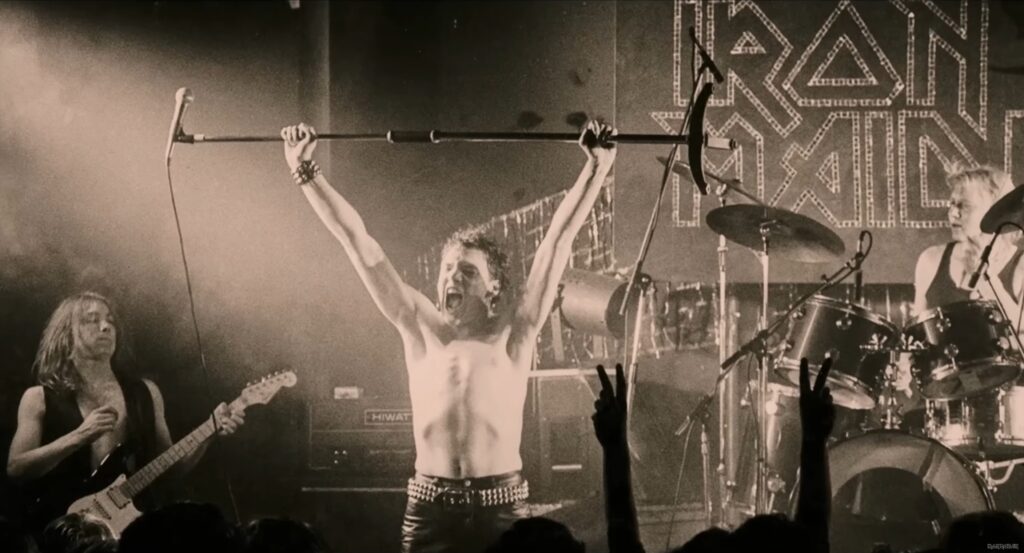
Telling a 50-year story in less than two hours is more or less impossible. Director Malcolm Venville and writer David Teague clearly understand this, and have therefore chosen to make this a story told mainly by the fans themselves – as well as by the band members. Some musicians are included, such as Tom Morello from Rage Against The Machine, Gene Simmons from Kiss, Chuck D from Public Enemy, Scott Ian from Anthrax, Lars Ulrich from Metallica and Katon W. De Pena from Hirax. Why exactly these people were chosen is something one can wonder about, but at least it is a varied bunch. At the same time, many ordinary fans are also given room to tell their stories. In the end, it is not really that important who gets to speak, as long as the story is told properly and well.
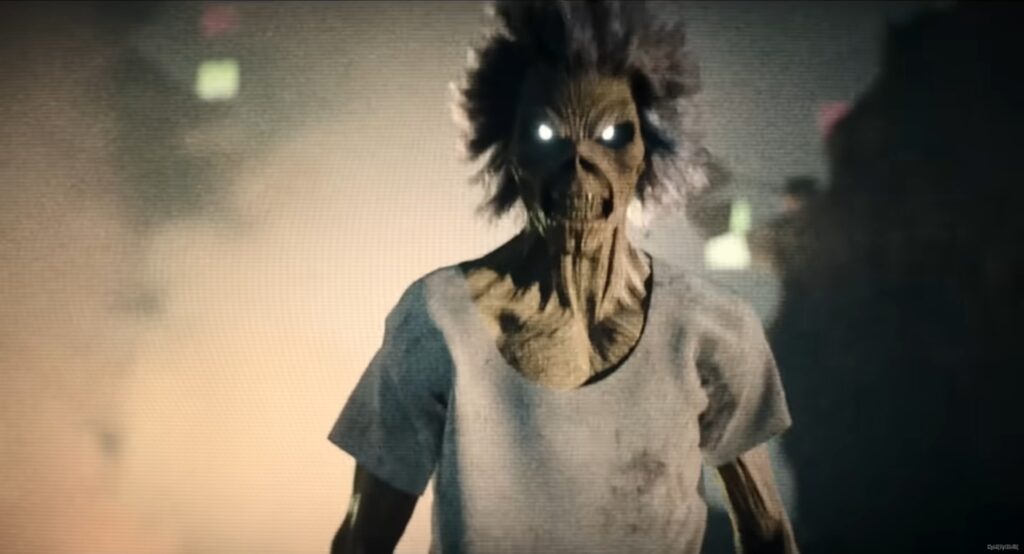
Still, there are certain voices you miss. We touch on both Samson and, naturally, the mascot Eddie, so why not give some speaking time directly to the sources, when both Thunderstick and Derek Riggs are still alive and would surely have been happy to share a few words? To be fair … it not really that much about Adrian Smith and Dave Murray either. But it feels a little strange when the story is told by fans and other musicians while the actual sources are still available. That is exactly what prevents me from giving the documentary full marks. Even though I fully understand that a lot has been left out. After all, this is not a ten-episode Netflix series – it is a film. But still, certain parts of the story could have been told better. I know that many former members feel a little overlooked, as they were important parts of the story without even being mentioned. At the same time, there is a lot the documentary simply does not have time to go through, such as the years 1986 and 1988, as well as the entire period after “Brave New World” in 2000 and up until Dickinson was diagnosed with throat cancer in 2014. In addition, the first three vocalists are skipped over completely, and the film presents it as if Paul Di’Anno was the band’s first vocalist. In fact, the documentary says it outright: “Paul Di’Anno was the first singer of the band”, which is simply not true.
Iron Maiden’s history has been told many times before, including through official books such as “Iron Maiden: Infinite Dreams” and “Run To The Hills”, as well as the documentary series “The History of Iron Maiden” parts 1 to 3. So when you are summing up the history of Iron Maiden, much of this will naturally be familiar. But that does not really matter. This is a documentary that gathers the story and presents it to a much broader audience. I know many people will complain about exactly that: “It tells us nothing new” and “I knew all of this already”. Of course – it would be strange to add things that do not already exist in the biographies. Even the Polish wedding is retold here, something that is already better documented in the 1984 film “Behind The Iron Curtain”.
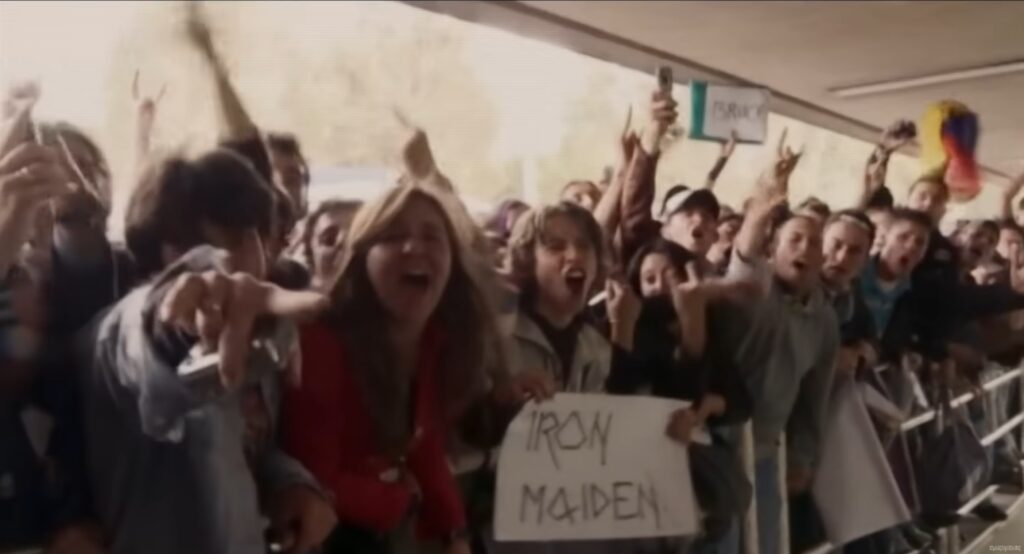
Naturally, there is a lot of archive footage, but that is perfectly fine when telling a story that stretches across 50 years. The alternative would have been to make a documentary about the present, based on new interviews. That is not what this film is about. I know many will complain about that as well, and that is fair enough. If you expect something completely new that you have never seen before, you may be disappointed. But perhaps the film should be seen more as a celebration of 50 fantastic years than as a traditional documentary?
What a fantastic journey it has been. If you are a fan, I imagine many people were sitting in the cinema with a lump in their throat. I certainly was, several times. There is something about going back in time, remembering when you discovered the greatest band in the world as a child, and then following that journey all the way up to today. So many fantastic moments, so many great concerts, so many good friends and so much great music. This is what Iron Maiden is about, and this is what we get. Even the adversity of the 90s, after Bruce Dickinson left the band, was in many ways fantastic. The sense of unity we had back then, and the enthusiasm among those of us who never left the band, was enormous. I look back on it as a good time. Something Steve Harris also mentions in the documentary. The adversity only made him more determined.
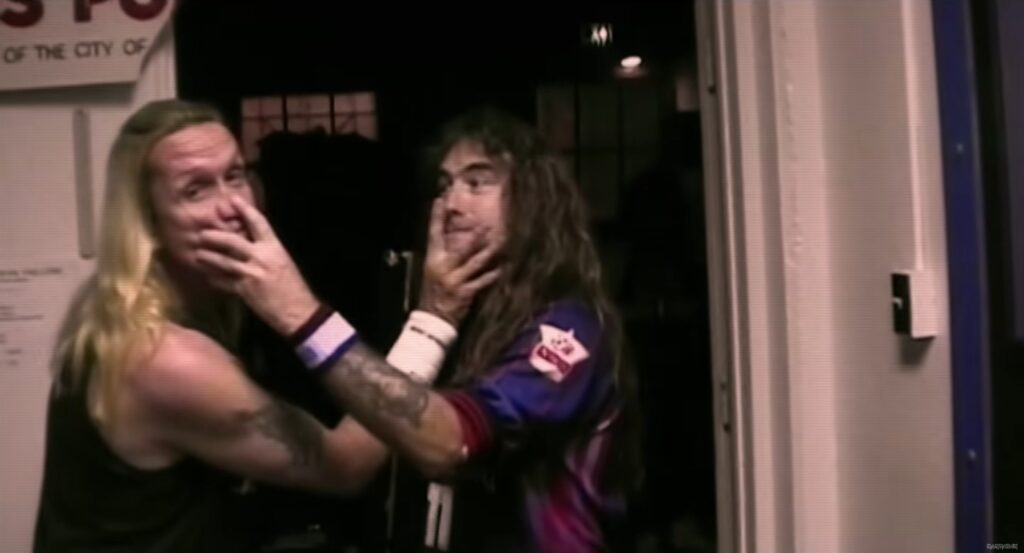
Outsiders might expect a classic rock ’n’ roll story filled with scandals and sex, drugs and rock ’n’ roll. Forget it. When Iron Maiden’s biggest scandal is that they played concerts six days a week for fourteen months, there is not much to dig up there. This is a heavy metal story about unity, brotherhood, the fans, and having a burning ambition – where you never compromise your own principles, even when commercial forces want the opposite. This is the story of the greatest band in the world: Iron Maiden.
About The Author